Smart Keypad
Product Architecture · Electromechanical Packaging
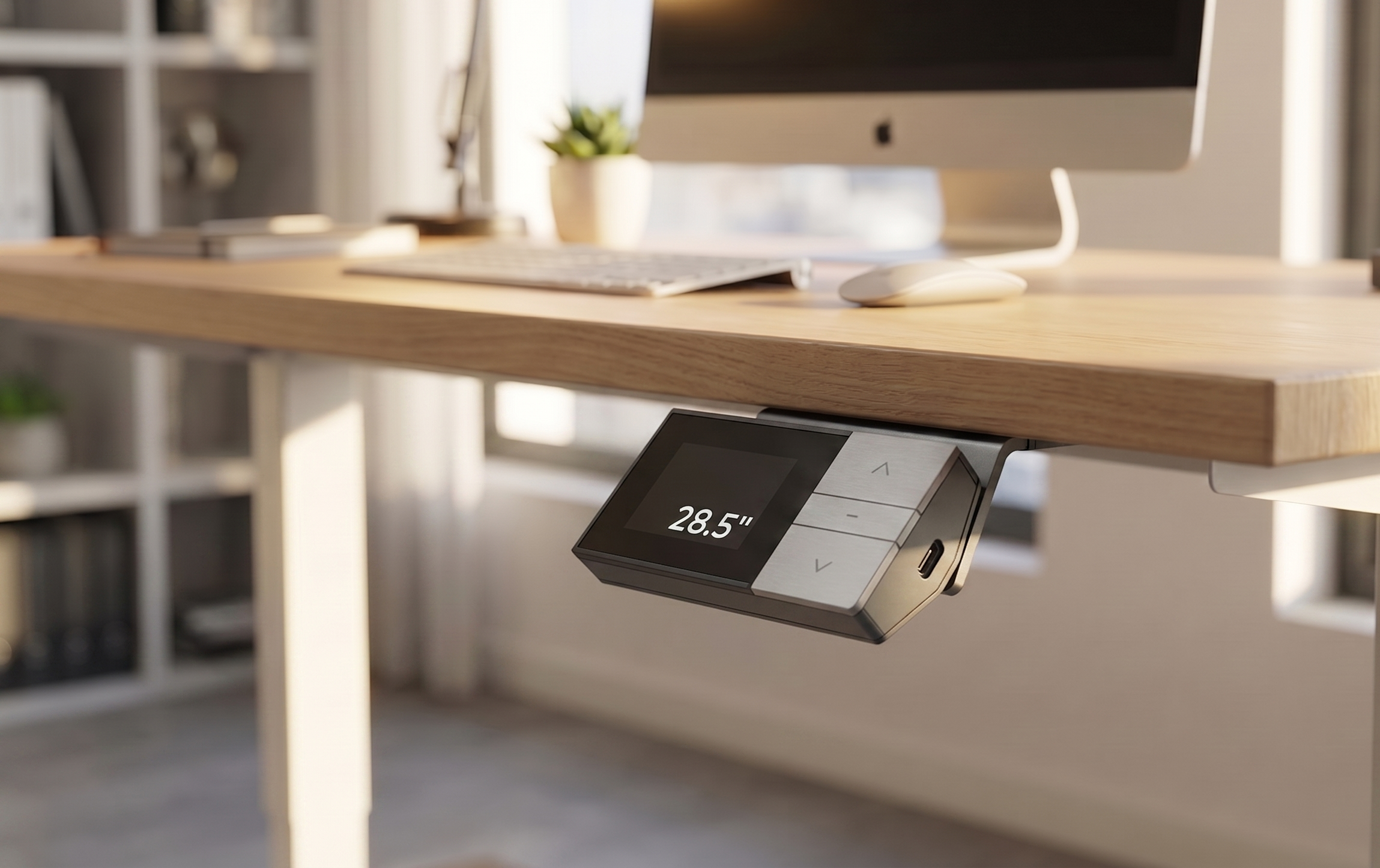
It's the architecture, not the housing.
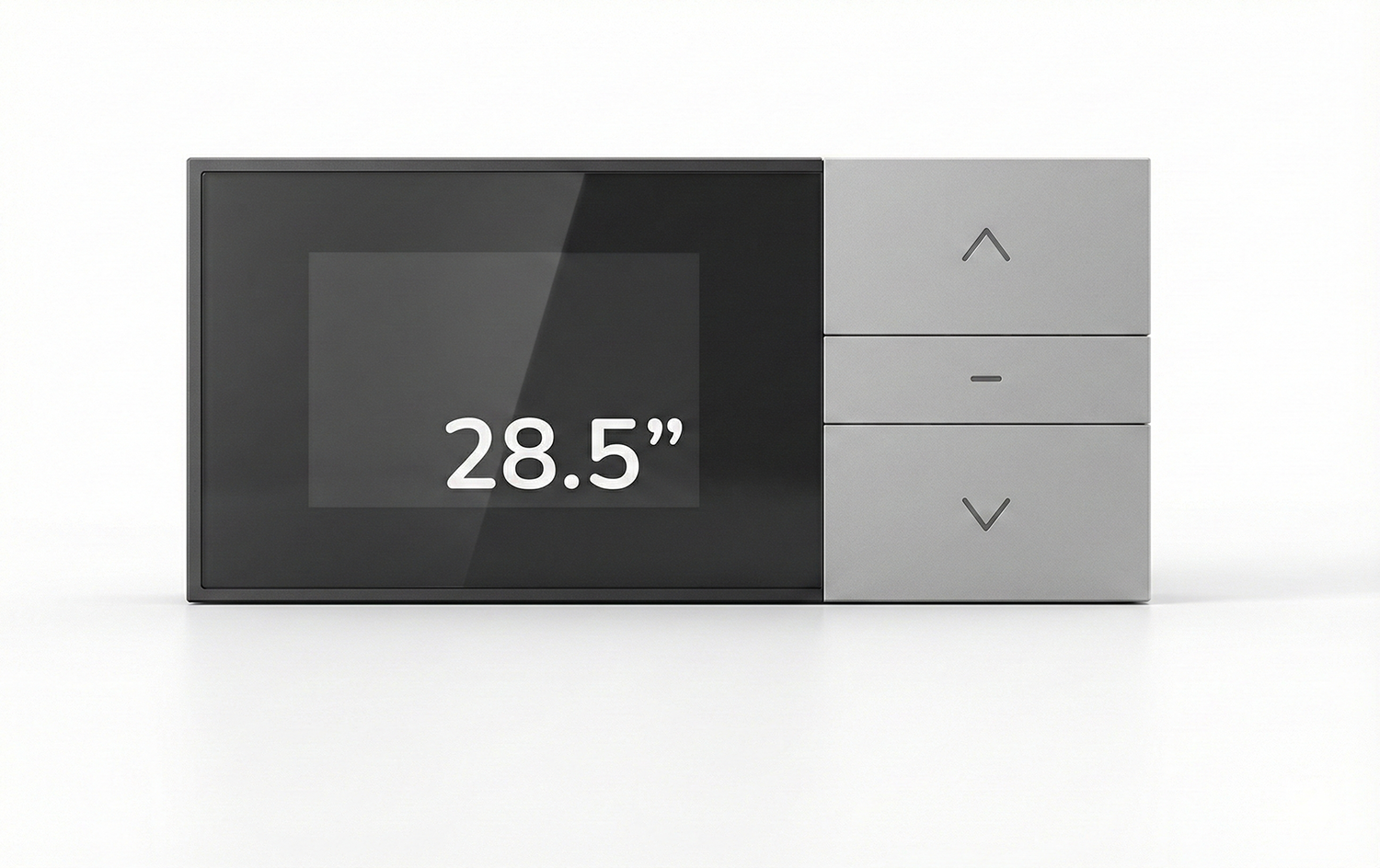
The real design problem with a bespoke smart keypad for height-adjustable desks wasn't the shell, but the internal system. The new PCB was roughly 30% larger and had to be packed into a more compact housing alongside bulky smart components, each in a specific orientation to avoid interfering with a motion sensor. All of this had to be achieved while ensuring that the exterior remained simple enough to operate by feel from either side of a desk.
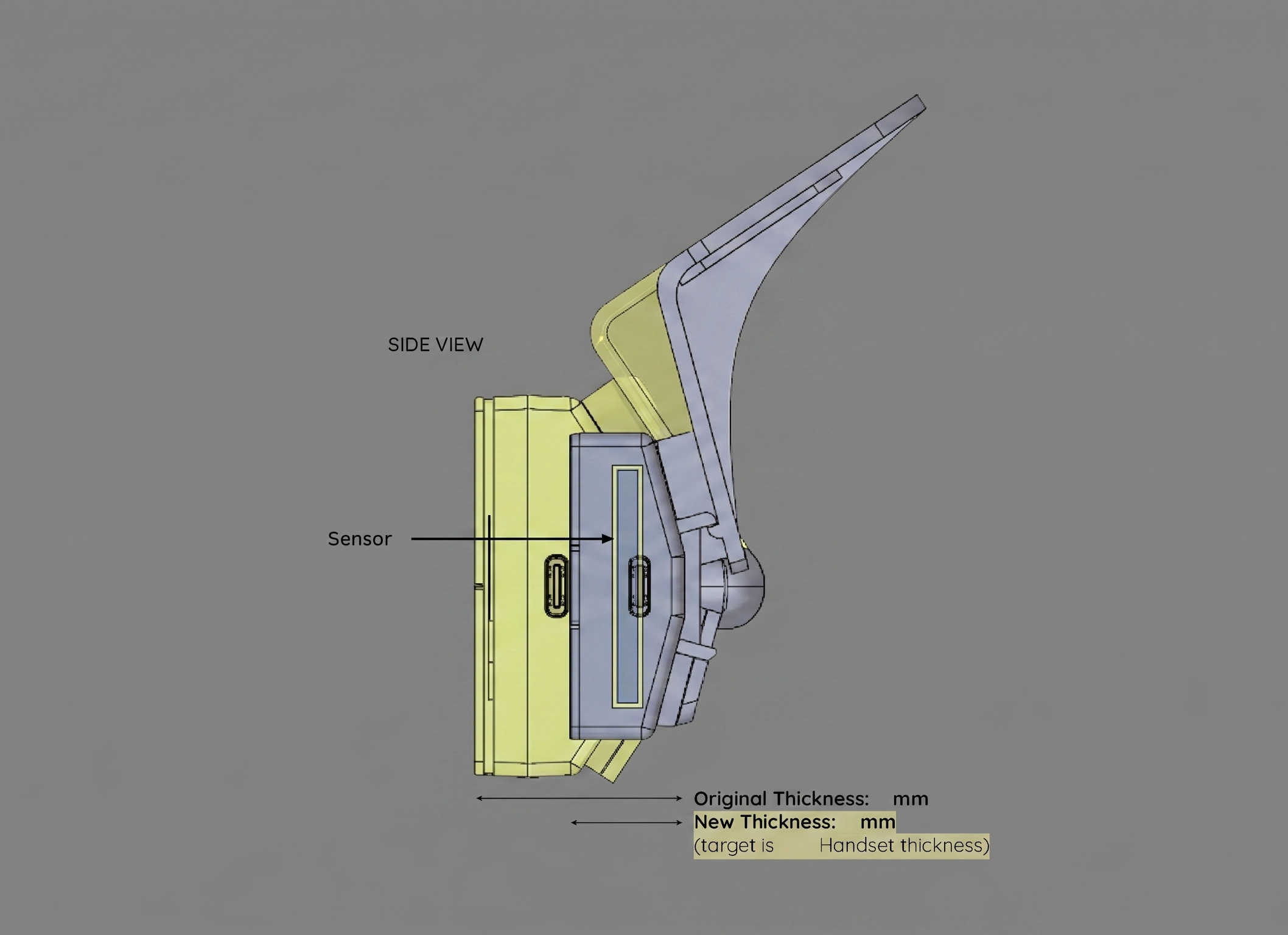
It was iterated against a real desk edge.
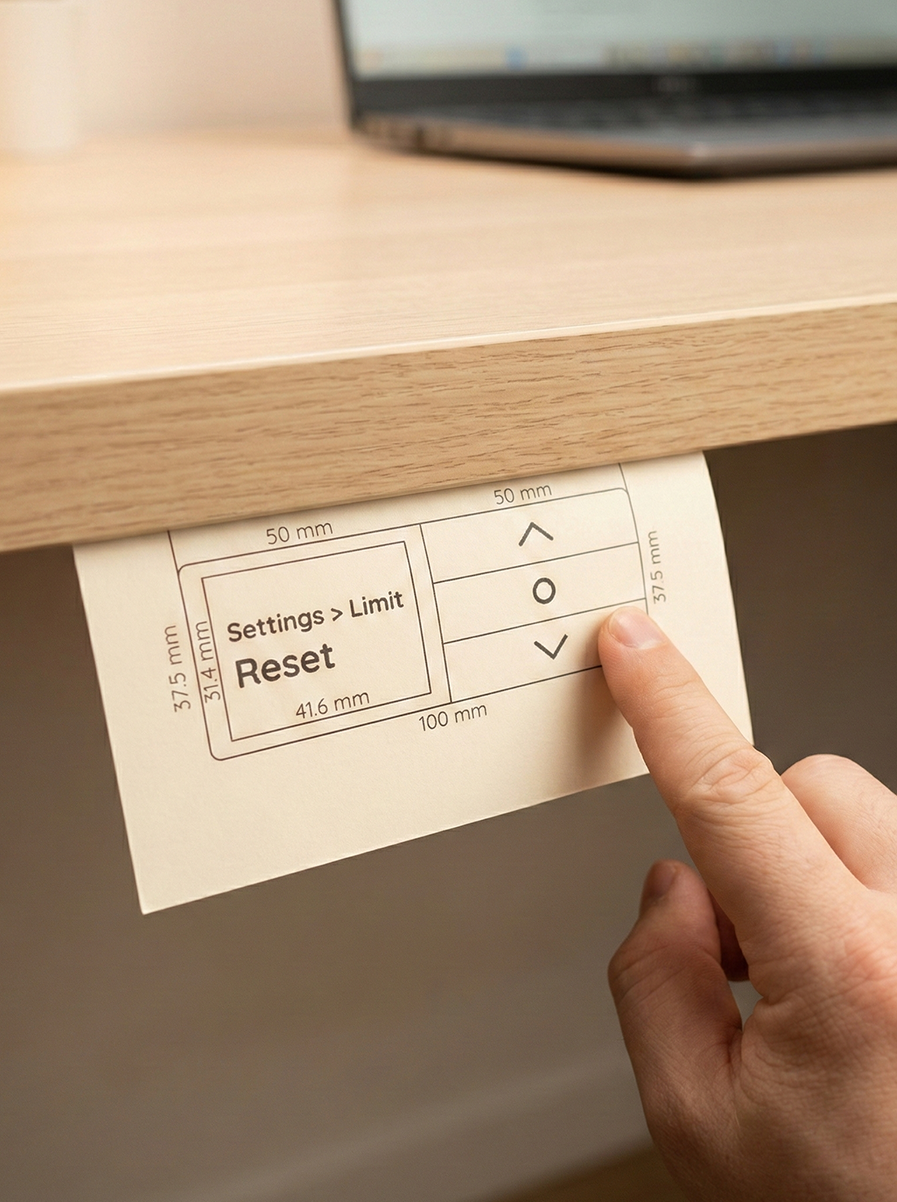
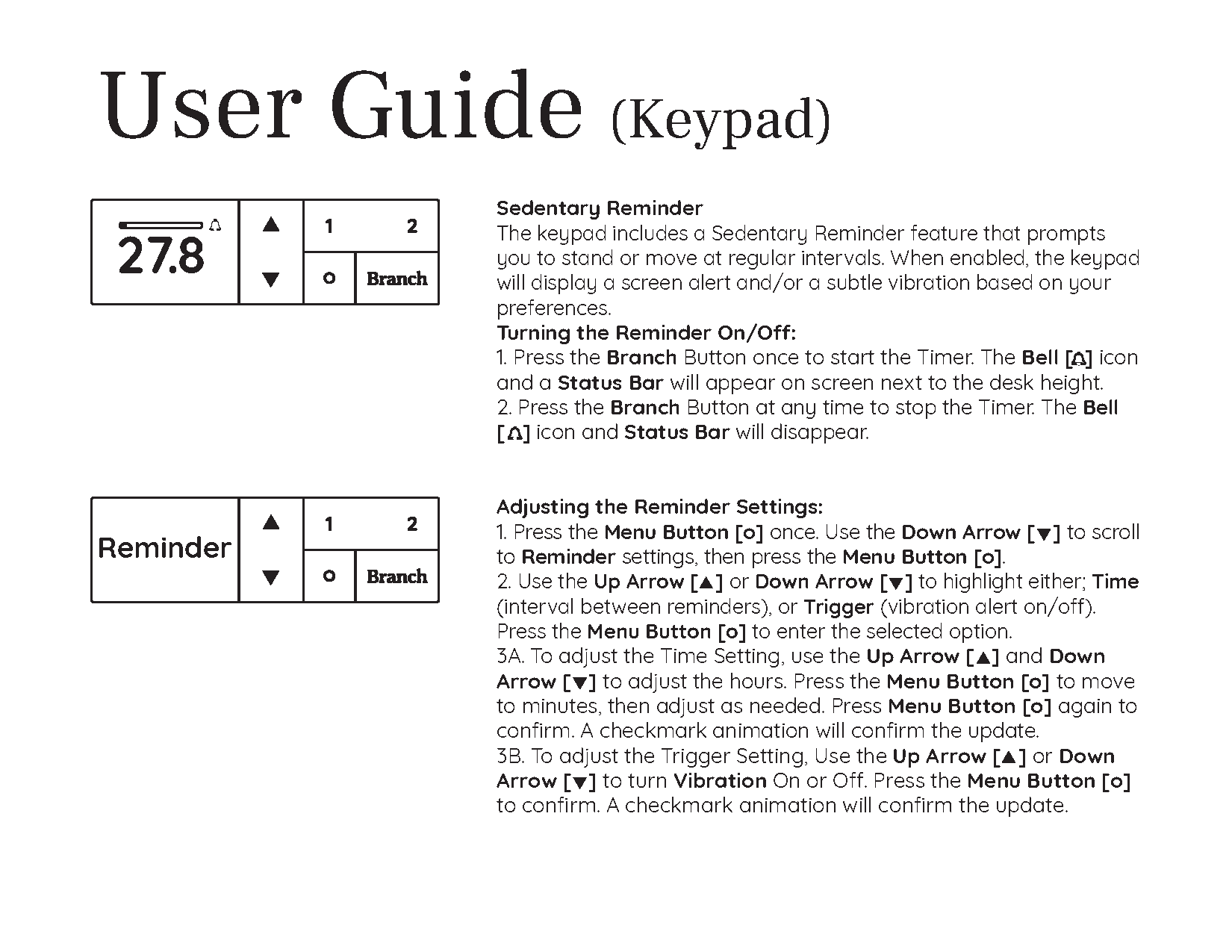
Selected concepts were sent to CAD to verify the packaging for the display and PCB. Full-scale physical mock-ups were run to test dimensions, mounting-bracket angles and tactile feedback against an actual desk edge, with the bracket being iterated through 12 proportion and size variations until the unit sat correctly in the hand and on the rail. Having previously authored instruction guides for standing desk models, I used direct customer feedback and historical pain points to inform the UI design, creating an intuitive, user-centred control unit that can be mounted on either side of the desk.
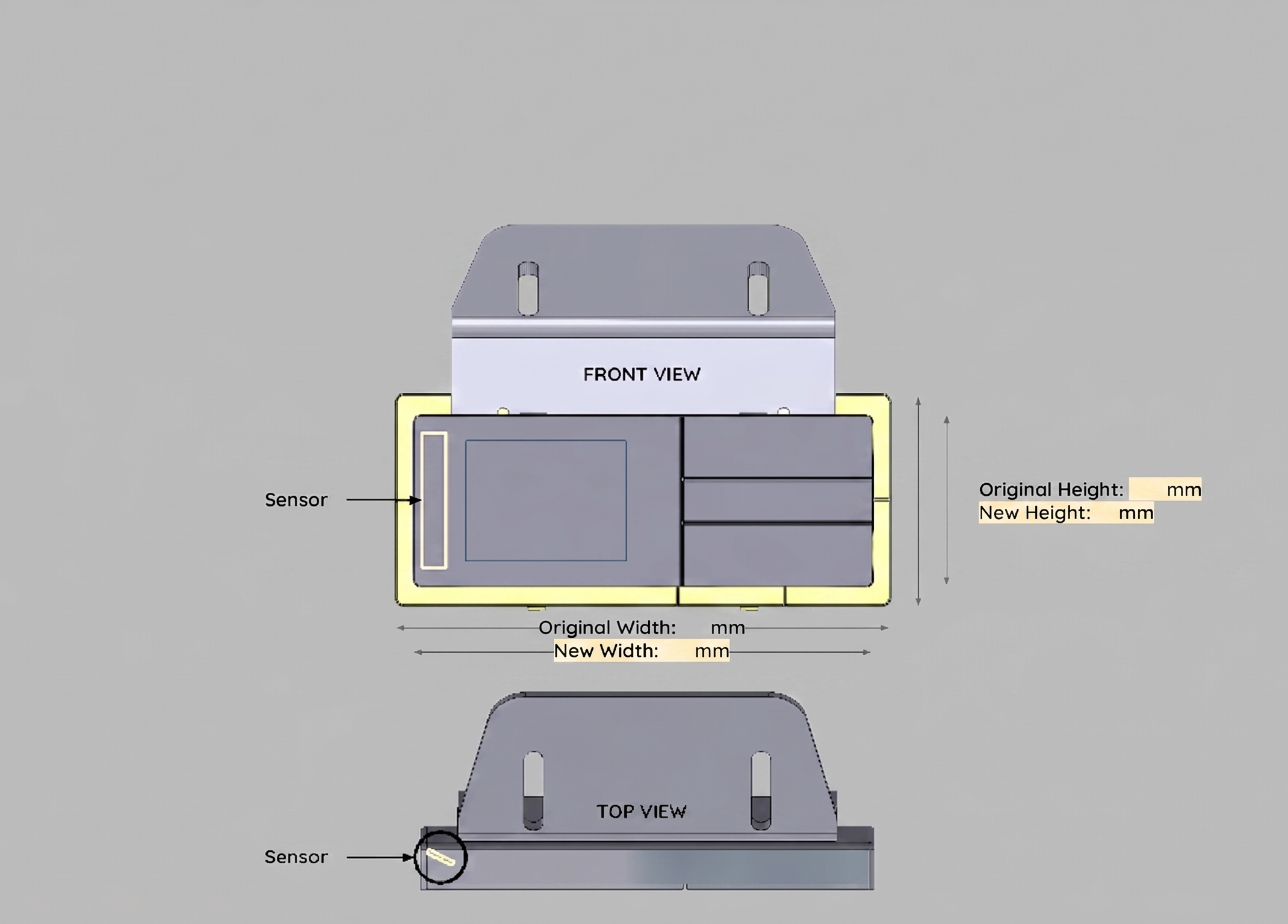
Complexity is packaged so that it never reaches the user.
An intuitive control unit whose most challenging work is invisible, the internal architecture is so refined that the exterior appears simple.
· PCB: ~30% larger than the previous model
· Enclosure: housing volume reduced by ~35%
· Bracket: 12 iterations of proportion and size, validated on a real desk edge
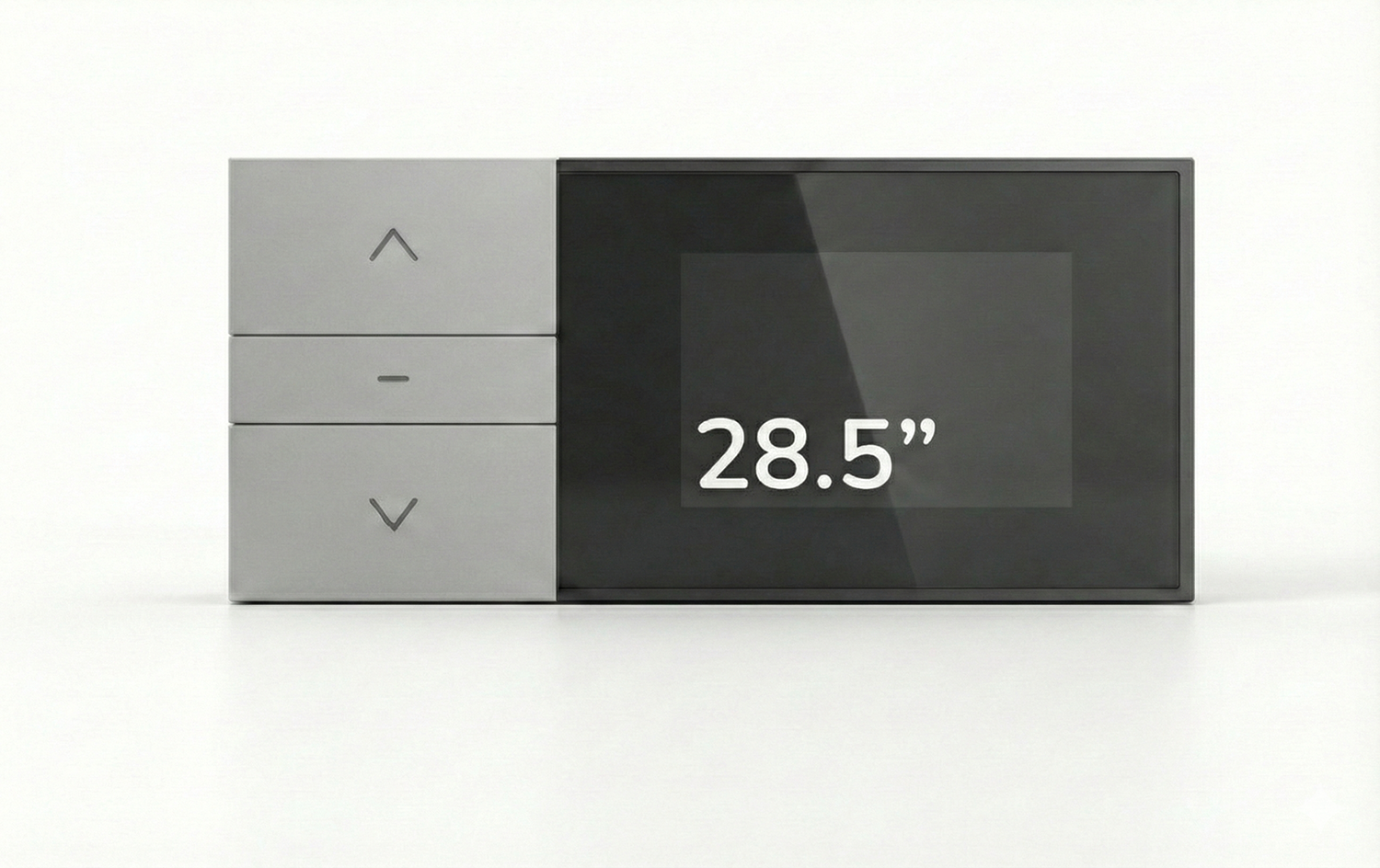
· Mounting: reversible on the left or right side of the desk
· Outcome: production-ready CAD delivered to the manufacturing partner

Next projects